CeraVe Moisturizing Cream while pregnant: the ingredients
The Truva app flags none of the ingredients in CeraVe Moisturizing Cream. ACOG and the NHS suggest moisturiser for itchy skin in pregnancy, but name no product. Here is what is on the label.
Answers for 6 life stages9 sources, all linked4 min read
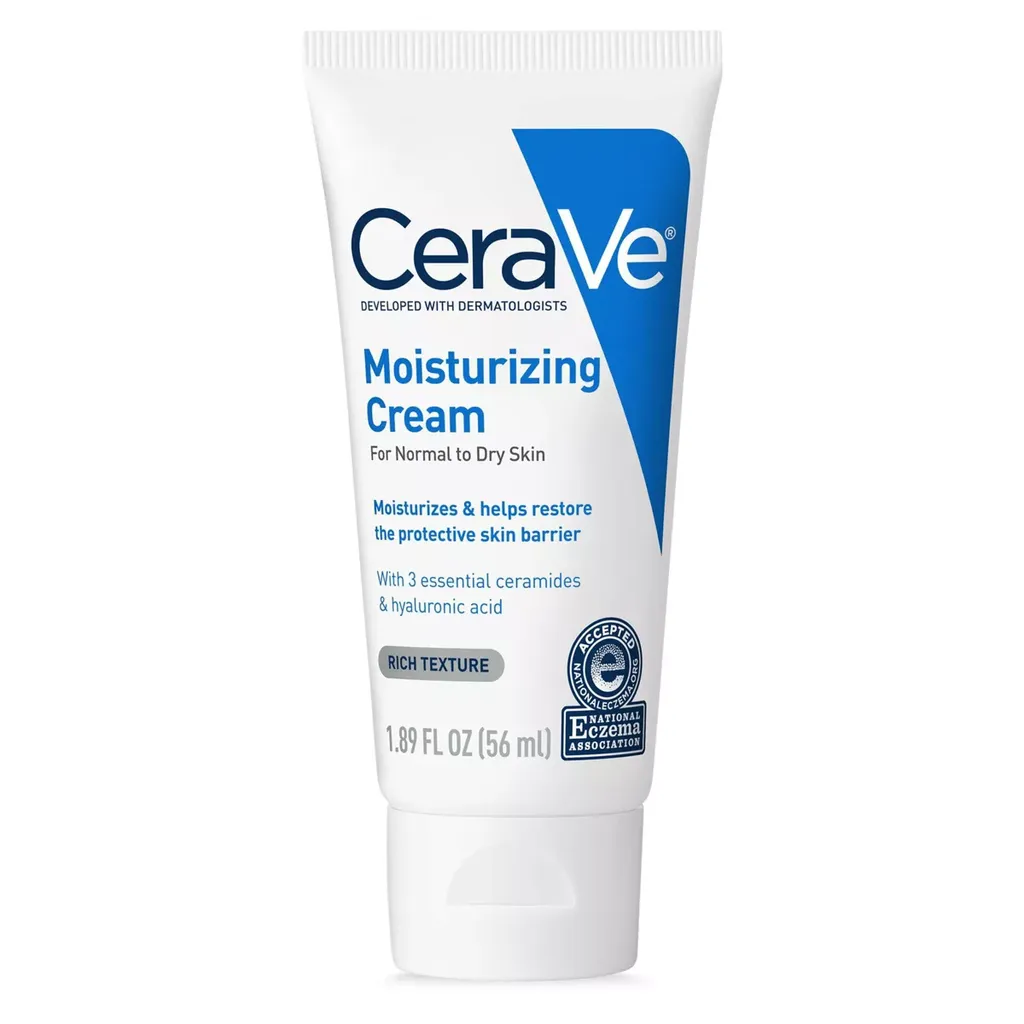
CeraVe
CeraVe Moisturizing Face & Body Cream for Normal to Dry Skin
How we checked the label
We compared the ingredient list in Truva’s catalogue with the list the brand publishes on 19 October 2026. They match.
What is in CeraVe Moisturizing Cream?
CeraVe Moisturizing Cream has 24 ingredients, with water first. The ones people ask about are its three ceramides and its preservative.
Glycerin is second. Petroleum jelly (listed as Petrolatum) is the seventh ingredient. The brand says it works by creating a physical barrier to help lock in moisture.
Three ceramides come soon after, listed as Ceramide NP, AP and EOP. The brand says they help restore your skin’s natural barrier. After them come dimethicone, a form of hyaluronic acid and cholesterol. The FDA lists petroleum jelly and dimethicone as skin protectant ingredients.
The AAD, the American dermatologists’ academy, says a moisturizer with ceramides helps seal in moisture in dry skin. No body cited here has published a rule on ceramides, hyaluronic acid, cholesterol, petroleum jelly or dimethicone in pregnancy.
Near the end of the list is phenoxyethanol. The EU’s cosmetics safety committee (the SCCS) considers it safe as a preservative in cosmetics at up to 1.0%. Its opinion does not mention pregnancy. It also leaves out exposure from anything other than cosmetics.
Ethylhexylglycerin is last. The app rates it and phenoxyethanol as low risk in pregnancy, which is not a flag. The label gives no amounts for any ingredient.
The label lists no salicylic acid, no sunscreen filters and no retinol. Other CeraVe creams have different lists, so check the label on yours. If it names salicylic acid, read our post on salicylic acid in pregnancy. If it has sunscreen in it, see how to read the filters.
Is CeraVe Moisturizing Cream safe in pregnancy, while breastfeeding, or with PCOS?
CeraVe Moisturizing Cream gets no flags in the Truva app at any life stage. No body cited here has published a rule on moisturisers while trying to conceive, after birth when not breastfeeding, or with PCOS.
Each row below shows the app’s reading and what is published for that stage. For every ingredient Truva rates in pregnancy, see the pregnancy ingredient list.
Pregnancy
ACOG’s advice for itchy skin in pregnancy is a heavy moisturizer twice a day. The NHS says to use an unperfumed moisturiser. Neither names this cream or its ingredients.
Breastfeeding
For eczema while breastfeeding, MotherSafe says emollients may be applied to the nipple area. It names no product. We could not open LactMed. See the breastfeeding list.
Postpartum, not breastfeeding
The app rates phenoxyethanol and ethylhexylglycerin as low risk after birth, not as a flag.
Trying to conceive
Truva’s ratings at this stage are its own call about the weeks before a pregnancy is known, not a published finding.
PCOS
The app rates petroleum jelly and ethylhexylglycerin as low risk with PCOS, not as a flag.
Not pregnant or breastfeeding
The brand calls this cream fragrance-free, and its label lists no fragrance. Other CeraVe creams have different lists.
Will CeraVe Moisturizing Cream help itchy skin or stretch marks in pregnancy?
ACOG and the NHS both advise moisturiser for itchy skin in pregnancy. Neither says a cream will remove stretch marks.
ACOG’s tips for itchy skin are to use a heavy moisturizer twice a day, and to wash with mild, fragrance-free soaps. The NHS says to use an unperfumed moisturiser or emollient regularly. It says not to use perfumed moisturisers or soaps.
This label lists no fragrance. The brand calls the cream fragrance-free.
If you have eczema in pregnancy, MotherSafe’s advice is a thick cream or ointment at least twice a day, to protect your skin barrier.
Stretch marks are a different question. ACOG says a heavy moisturizer may keep your skin soft, but it will not get rid of them. The NHS finds no reliable evidence that creams remove them, and limited evidence that creams prevent them.
Who should I ask?
The NHS says to talk to a GP, nurse or pharmacist if a cream burns or stings and does not settle after a few days. That is usually a reaction to an ingredient.
Itching on your palms or soles in pregnancy is a different matter. The NHS says it could be a sign of a liver condition (ICP) that needs urgent treatment.
The brand says its ingredient lists are updated regularly, and to check the list on your pack. You can check a different product’s list with our compare tool.
For another plain moisturiser read from its label, see Aquaphor while breastfeeding.
Where this came from
Every health claim on this page links to the body that published it. Nothing here comes from another blog.
Show all 9 sources
- NHSItching in pregnancyThat the NHS advises an unperfumed moisturiser for itchy skin in pregnancy, and urgent help for itching that may be a liver condition.
- NHSEmollientsWhat the NHS says an emollient is, and the kinds of reaction to watch for.
- NHSStretch marks in pregnancyThat the NHS finds no reliable evidence creams remove stretch marks, and limited evidence they prevent them.
- American College of Obstetricians and GynecologistsSkin Conditions During PregnancyACOG's advice on a heavy moisturizer twice a day for itch, mild fragrance-free soaps, and that moisturizer will not remove stretch marks.
- MotherSafe (Royal Hospital for Women, NSW Health)Eczema (Atopic Dermatitis) in Pregnancy and BreastfeedingMotherSafe's eczema advice: a thick cream moisturiser at least twice a day, and that for nipple eczema, emollients may be applied to the nipple area.
- American Academy of DermatologyDry skin remedies for darker skin tonesWhat the AAD says about ceramide moisturizers, fragrance-free moisturizer, and creams over lotions for dry skin. Not pregnancy specific.
- EU Scientific Committee on Consumer SafetyOpinion on Phenoxyethanol (SCCS/1575/16)That the SCCS considers phenoxyethanol safe as a cosmetics preservative at up to 1.0%. It does not mention pregnancy.
- US Food and Drug Administration (Electronic Code of Federal Regulations)21 CFR 347.10 Skin protectant active ingredientsThat the FDA lists dimethicone and petrolatum as skin protectant active ingredients. It says nothing about pregnancy.
- CeraVe, brand pageMoisturizing CreamThe ingredient list as the brand prints it, and the brand's own words on fragrance, ceramides and petrolatum. Not a safety source.
Every link above was fetched and confirmed to resolve on .
Truva summarises published guidance from bodies including ACOG, the FDA, the EU SCCS and the Cosmetic Ingredient Review. It has no access to your medical history and it is not a substitute for your doctor, dermatologist or midwife. This post was written by the Truva team from the sources listed above. It has not been reviewed by a clinician, and nothing in it is a diagnosis or a prescription. If you are pregnant, breastfeeding or being treated for PCOS, take the ingredient list to the person looking after you.
The label in your hand, read against your situation.
Truva scans a product and answers for the profile you set: pregnancy, breastfeeding, postpartum, trying to conceive, PCOS, or general use. Every flag names the body it came from, so you can take it to a doctor or midwife rather than take it on trust.
Download on theApp Store